Resin over concrete or tarmac: observations and questions
Make a factual note about the concrete slab or tarmac area before arranging a visit; a web page cannot inspect what is beneath, between or around the visible finish.
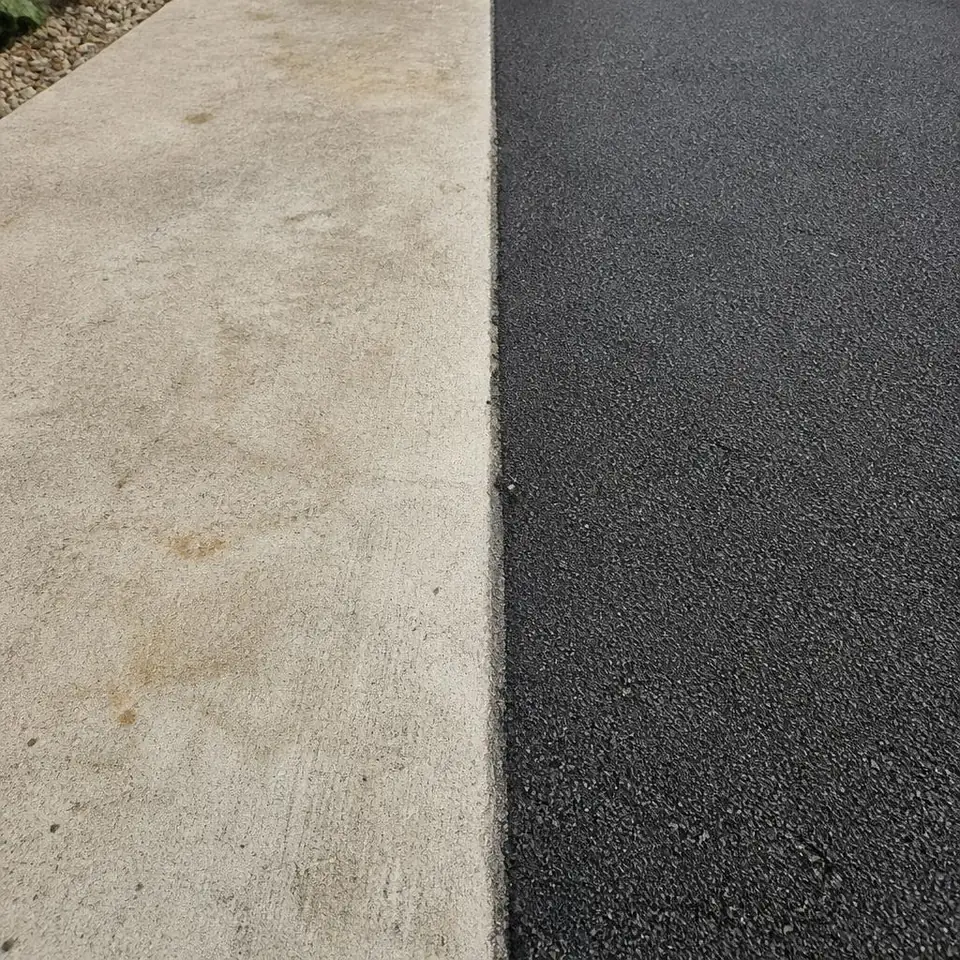
Why an online answer is limited
A photograph may show a mark but not explain movement, hidden construction, the relationship between a slab and its joints, or how an asphalt edge meets the rest of the frontage. Levels, boundaries, access and water behaviour also need to be considered at the property. The question therefore needs an in-person review rather than a universal online answer.
Make a factual site note
Walk the area safely and describe what is visible without drilling, lifting or scraping. Mark the position of joint lines, broken corners, loose-looking pieces, depressions, repairs and changes from one section to another. Describe location and appearance; do not diagnose the cause.
- Take one wide view of the frontage and closer views of each marked area.
- Place joint lines, repaired patches and depressions on a simple sketch.
- Include the garage apron, door threshold, ironwork, kerb line and boundary.
- Note when the change was first noticed, if known.
Concrete observations
Note crack direction, flaking, staining, repaired sections, unevenness and the way the slab meets a threshold or wall. A photograph cannot show whether a line is superficial or connected with movement, so leave that distinction for the person visiting.
Tarmac observations
Note loose or crumbling areas, depressions, repaired patches, soft-looking margins and any place that appears to move. Include the relationship with the kerb, gate, path or neighbouring asphalt. Do not turn an appearance into a conclusion about the proposed work.
Document thresholds, margins and water
Use the sketch to show the door line, air bricks, wall face, gate opening, kerb reveal, inspection covers and adjoining paving. After rainfall, note where water appears to collect or travel without trying to test, redirect or block it. State where the observation was made and what was actually seen.
Prepare for a site visit
Send the wide and close views, approximate dimensions, access notes, known history of the slab or asphalt, and concerns about thresholds or boundaries. Include previous repairs or alterations, but label anything uncertain as a question.
Questions to ask
- Which marks, joints or changes need checking at the property?
- What parts of the slab or asphalt would remain, and what would be excluded?
- How would thresholds, kerbs, covers and adjoining paving appear in the written scope?
- Which drainage, planning or engineering questions require the relevant authority or qualified professional?
- What assumptions, exclusions and proposed work will be set out in writing?
Do not infer a solution from a photograph
A photograph cannot answer the application question or confirm preparation, thickness, performance, durability, guarantees or the final result. Ask for a visit and a written scope rather than relying on a general online rule.
For related information, see the resin bound driveway service, the downsides of resin driveways guide, return to the blog or use the contact page.
Request an in-person assessment
Send photographs, access details and your observations. Driveway and Patio Kent is fully insured and free written quotes are available.
Request an assessment