Resin bound vs resin bonded: a neutral comparison
The names are similar, but the materials are assembled differently. Use this guide to compare what you can see, ask and maintain.
The short version
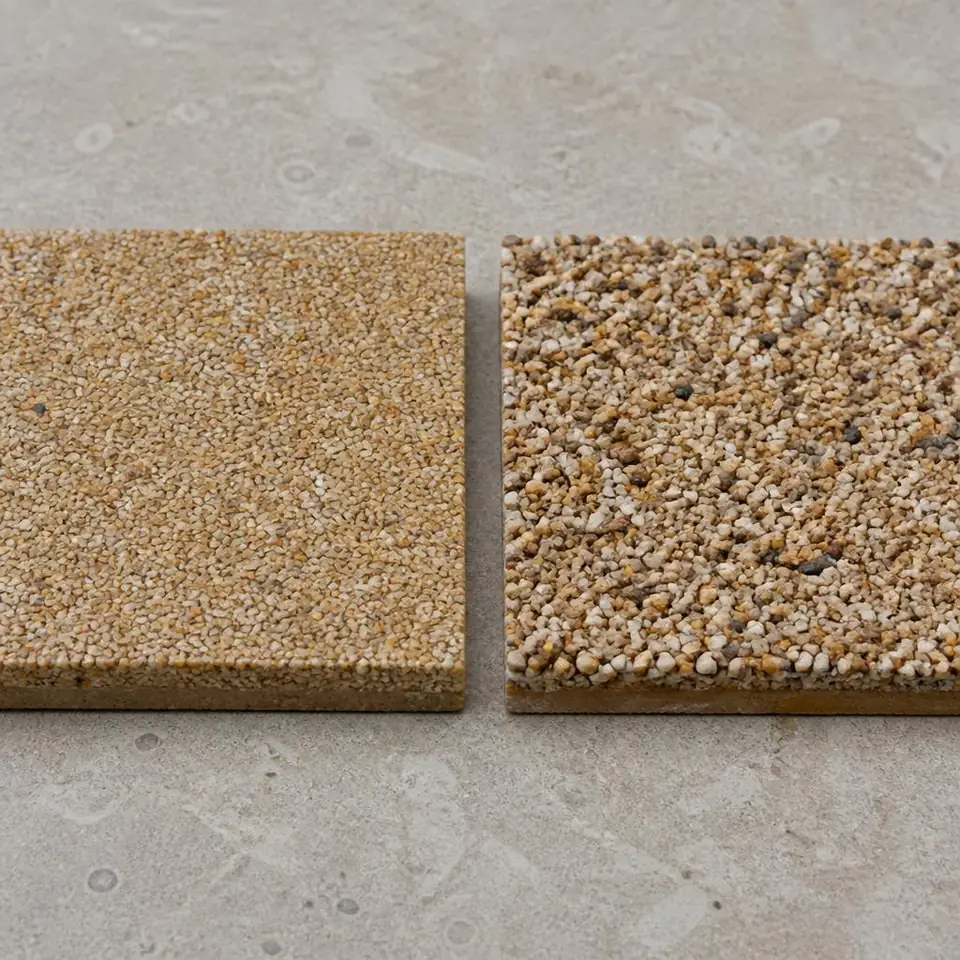
In the bound system, aggregate is mixed with resin before the mixture is spread and levelled. In the bonded system, resin is applied to a prepared base and aggregate is broadcast onto it. That difference affects texture, the visible layer and the questions worth asking about care.
| Point to compare | Resin bound | Resin bonded |
|---|---|---|
| How aggregate is placed | Mixed with resin first, then spread. | Placed onto a resin-coated base. |
| Typical feel | Often more even underfoot when correctly installed. | Usually has a more textured aggregate face. |
| Visual character | A relatively continuous field of exposed stone. | A stone-covered finish with the base visible between areas of aggregate. |
| Main comparison question | What mix, base and finish are specified? | What resin layer, aggregate and retention method are specified? |
Run a sample audit
Put each sample beside the entrance, a door threshold and a neighbouring material. View it in bright and dull daylight, then look at it from the distance at which it will normally be seen. Note the grain size, colour spread, shine and any visible gaps. This small exercise is more useful than choosing from a product name alone.
- Record the exact aggregate blend and any colour variation.
- Check whether the texture feels appropriate for shoes, wheels or outdoor furniture.
- Mark where the pattern or exposed stone will meet steps, gates and covers.
- Ask whether the sample shows the intended edge detail as well as the centre.
How the two surfaces are assembled
Resin bound
The selected stone and binder are combined before placement. The mixture is then spread and levelled to form the visible layer. Ask how the substrate will be prepared, how the edges will be contained and what finish is expected once the layer has cured.
Resin bonded
A binder layer is applied first, followed by stone placed into the coating. The appearance depends on the binder, the chosen stone and how evenly it is distributed. Ask which areas are suitable for this build-up and how loose pieces will be dealt with.
Compare the visible finish
Request samples or photographs that show the same blend in different light. Compare the size, colour and shape of the aggregate, as well as the amount of variation between pieces. A smooth-looking image does not describe every installation detail, so use it as a prompt for questions rather than a promise of the finished appearance.
- Does the texture feel comfortable for the intended use?
- Will the chosen colour sit comfortably beside nearby brick, render or paving?
- How will the finish meet a wall, gate, step or inspection cover?
- Can the contractor show the proposed blend and edge detail in the written specification?
Maintenance questions to ask
Care depends on the binder, stone, substrate and surrounding conditions. Before choosing either option, ask for written care guidance rather than assuming that two products with similar names need the same treatment.
Cleaning
Which brush, water pressure and cleaning products are suitable?
Loose aggregate
What should be done if pieces become loose or displaced?
Staining
Which spills need prompt attention and which products should be avoided?
Edges and joints
What should be checked where the finish meets another material?
Read the specification line by line
A useful written specification should let you compare like with like. Look for the named aggregate, binder, laying method, edge treatment and any stated preparation. Check whether removal, protection of neighbouring areas, access arrangements and final cleaning are included or excluded. If a phrase is unclear, ask for it to be explained in plain English before accepting the quotation.
Keep the sample, marked-up sketch and written answer together. They provide a clearer record of what was discussed than a broad promise about appearance or performance.
Make a neutral comparison
Neither label answers every question about a proposed installation. Compare the sample, written specification, base assumptions, edges, access and maintenance guidance together. Avoid choosing from a name alone, and avoid treating an example photograph as evidence of a particular result.
For a wider surface comparison, return to the blog. To request a written quote for a specific specification, use the contact page.
Request a written resin quote
Include the surface type, preferred aggregate, approximate area and access details when you get in touch. Driveway and Patio Kent is fully insured and free written quotes are available.