Resin driveway colours: a visual selection guide
Use the real surroundings and changing daylight to judge tone, fleck and contrast before recording a colour choice.
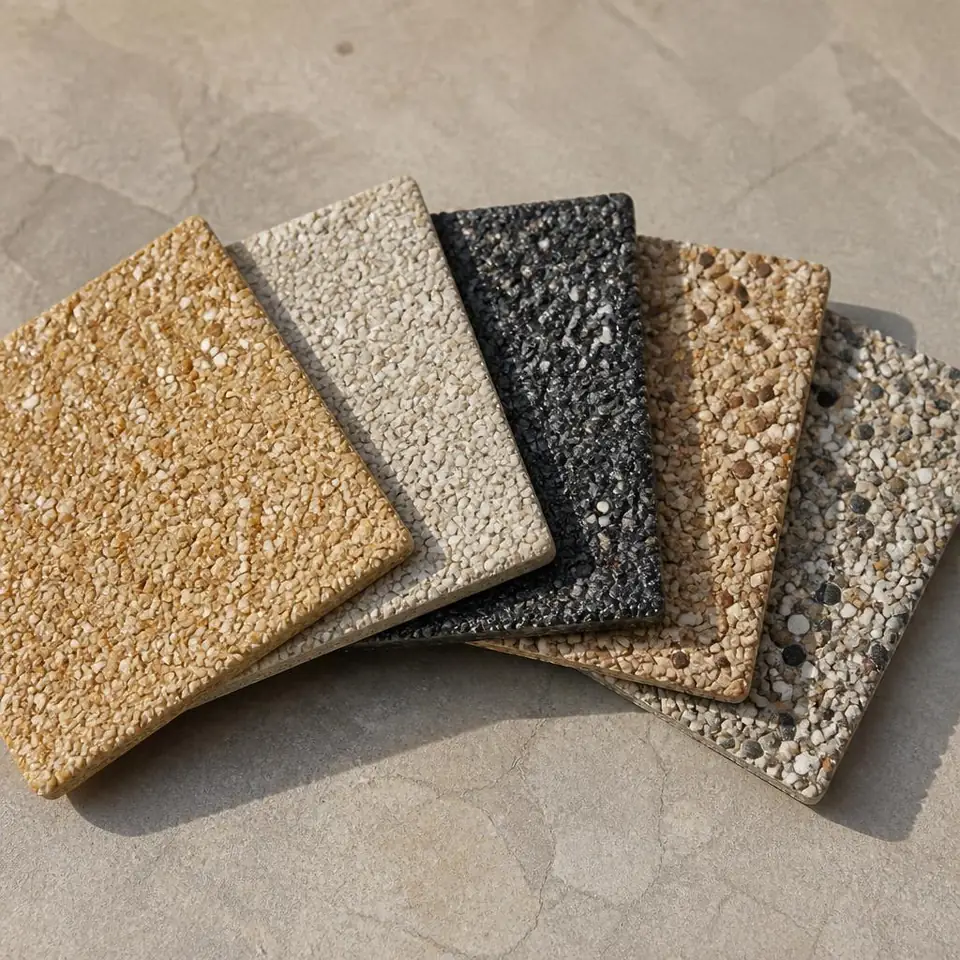
Read the colour in context
Start with the fixed colours around the entrance: brick or render, doors, roof, walls, boundary panels and planting. A blend that looks balanced on a screen can appear different beside those surfaces. Record the viewpoints that matter, including the approach, windows and garden path.
Judge tone, fleck and contrast
Look separately at the overall tone and the individual flecks within it. Note whether the visual impression is warm, cool, pale, deep or mixed, and whether the variation is quiet or prominent. These descriptions help a quotation refer to an appearance rather than an unverified marketing name.
Use more than one light condition
- View the reference in direct daylight and shade.
- Step back to judge the overall field of colour.
- Move closer to inspect the size and distribution of flecks.
- Compare it against the building, not only against white paper.
Notice how colour is perceived
A colour description is an impression, not a guarantee of how every person or camera will record it. Hue, brightness, contrast and the surrounding backdrop can all change the apparent balance. A pale blend may look more pronounced against a dark wall, while a deeper blend may seem quieter beside dark planting.
Compare the same reference consistently
Keep the labelled reference, viewing position and lighting note together. If two photographs make the same blend appear different, treat that as a reason to inspect it again rather than choosing from the photograph alone. Avoid describing a colour as permanent, fade-proof or universally suitable without product information.
For a useful colour record, write down the dominant hue, relative lightness and whether the flecks read as scattered, clustered or evenly distributed.
Describe the visual register
When discussing a colour, separate its undertone from its lightness and from the amount of contrast between individual stones. A blend can have a quiet, even register or a more granular, flecked register. It can also carry a slight warm or cool cast that becomes more noticeable against an adjacent wall.
This language is deliberately descriptive rather than a product ranking. It gives the person preparing the offer a clearer record of what you noticed: the dominant tone, the visible range, the size of the flecks and the backdrop against which the decision was made.
Test the visual balance
Consider the amount of contrast wanted at the entrance. A close tonal relationship may make the surface sit quietly beside the building; a stronger difference may make an edge or route more noticeable. Neither is automatically preferable.
Check edges and adjoining colours
Place the reference beside kerbs, steps, walls, gates and existing paving. Note whether the visible boundary should blend into its surroundings or be easy to distinguish. Keep a labelled photograph of the combination that was actually discussed.
Ask what the blend description means
Colour names can hide differences in stone, proportion and size. Ask how the selected blend is identified, whether the proportions are recorded and which aggregate sizes are included. Make sure the reference and the written specification use the same description.
- Is the reference labelled with the exact blend description?
- Which aggregate sizes and visible proportions are included?
- Can the proposed colour be viewed in the intended surroundings?
Separate colour from unverified performance claims
Do not infer availability, colour permanence, UV stability, cleaning requirements or suitability from a photograph, label or general description. Ask for the exact product information and defer technical questions to the relevant manufacturer or qualified professional.
Record the choice for an offer
Send photographs, access details and the labelled reference with your enquiry. Ask for the blend description, aggregate size, visible edge details, preparation, exclusions and any agreed alternatives to appear in the written scope. For related information, see the resin bound driveway service, return to the blog or use the contact page.
Request a written colour specification
Include your labelled reference and access details. Driveway and Patio Kent is fully insured and free written quotes are available.
Request a written quote