Block Paving Driveway Contractors in Kent
Block paving provides a flexible surface with colours, patterns and borders for residential driveways, paths and front garden hard-standing. Driveway and Patio Kent is fully insured and provides free written quotes.
Block Paving Installation for Kent Homes
A block paved surface is built from the ground up: excavation, suitable sub-base, compaction, levels and falls, edge restraints, laying course, blocks, cuts and jointing. The preparation depends on the ground, intended use, access and drainage.
Block Paving Patterns, Colours and Job Sizes
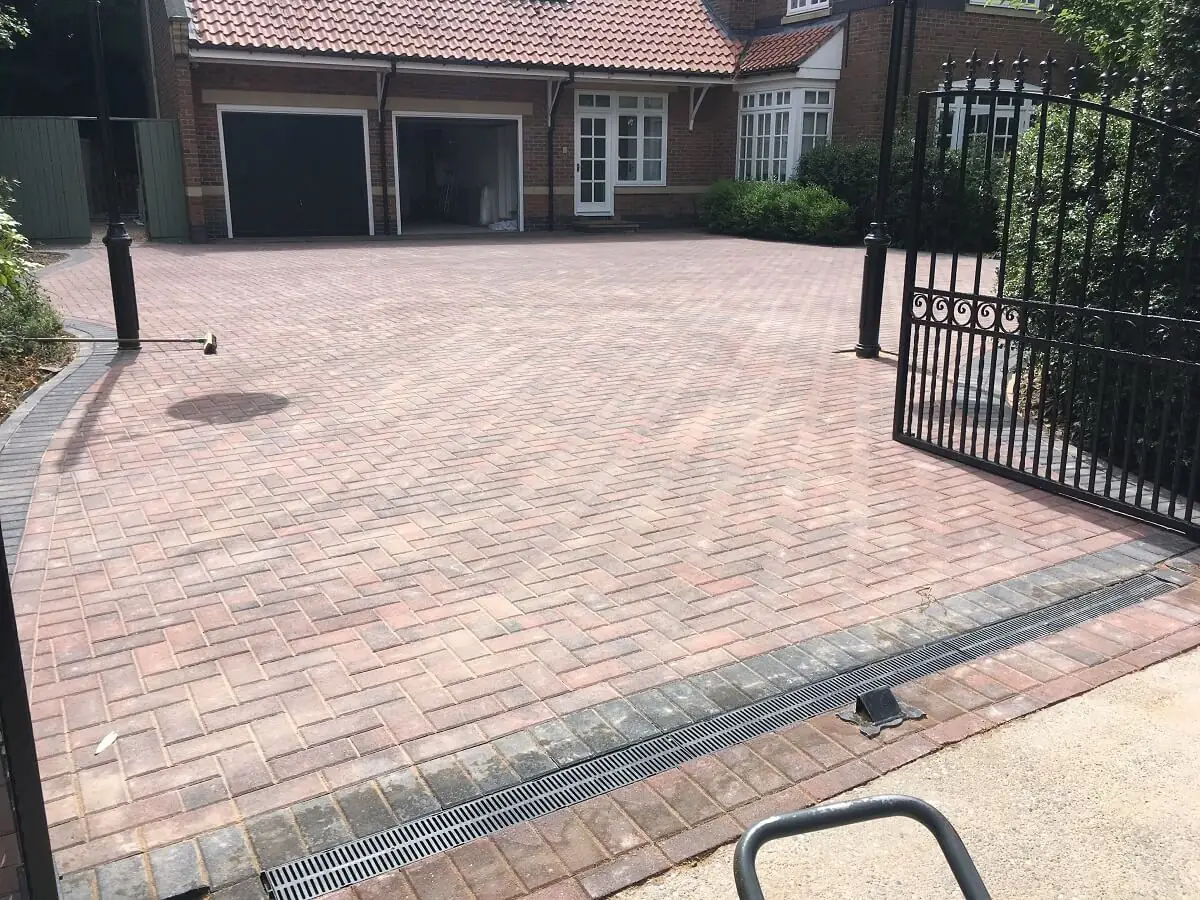
Herringbone, basketweave and stretcher bond create different layouts. Borders and edge restraints frame the area, while colour blends should be checked with the property and adjoining paving. Small paths, medium residential driveways and large or shared-use areas have different access, traffic and detailing questions.
Standard and Permeable Block Paving
Standard block paving with sand-filled joints is not automatically permeable. Permeable paving requires suitable blocks, jointing, laying course, sub-base and drainage designed as one system. Planning or drainage compliance should not be assumed.
Block Paving Repairs and Care
Individual blocks can often be lifted where appropriate, but settlement, movement or staining should be investigated first. Sweeping and joint sand top-ups may be relevant. Re-sanding or sealing is not presented as an included business service; ask whether either is suitable, offered and quoted separately.
Block Paving Quote Factors
A written quote should identify area size, excavation and disposal, sub-base, compaction, edge restraints, drainage, blocks, pattern, borders, cuts, access, steps, thresholds and inclusions. Larger or commercial suitability must be confirmed for the specific proposal.
Block Paving Across Kent
Block Paving Guide and Comparisons
Read the block paving driveway guide for patterns, edges, maintenance questions and written-quote comparisons. Compare resin bound driveways for a smoother finish.
Block Paving Driveway FAQs
How is a block paving driveway constructed?
A block paving driveway may include excavation, a suitable sub-base, compaction, levels and falls, edge restraints, laying course, blocks, cutting, jointing and final compaction. The build-up depends on the ground and intended use.
Can block paving be permeable?
Permeable block paving needs suitable blocks, jointing, laying course, sub-base and drainage designed as one system. Standard block paving with sand-filled joints is not automatically permeable.
Can individual blocks be repaired or replaced?
Individual blocks can often be lifted and replaced where the construction allows it, but the cause of settlement, movement or staining should be investigated first. Replacement blocks may not be an exact visual match.
What affects the cost of block paving?
Quote factors include area size, excavation and disposal, ground and sub-base condition, compaction, drainage, edge restraints, access, block choice, pattern, borders, cutting and existing construction.
How deep should a block paving driveway be excavated?
There is no single depth that suits every property. Excavation depends on existing ground, levels, drainage, access, the proposed build-up and vehicle use.
What makes a good sub-base for block paving?
The sub-base needs to be suitable for the ground, load and drainage arrangement, and it must be placed and compacted properly. Edge restraints, levels and the laying course also affect the result.
Which block paving pattern and colours should I choose?
Herringbone, stretcher bond and basketweave create different visual rhythms. Borders can frame an area, while colour blends can relate to brickwork, walls or existing paving. Check a current sample in context.
Does block paving need re-sanding or sealing?
Joints may need sweeping and occasional sand top-ups. Re-sanding or sealing is not treated as an included service here: ask what is suitable for the blocks and jointing, and whether it is offered and quoted separately.