Does Water Drain Through a Resin Driveway?
Resin-bound surfaces can let rainwater through, but the base and the drainage design determine where it goes next.
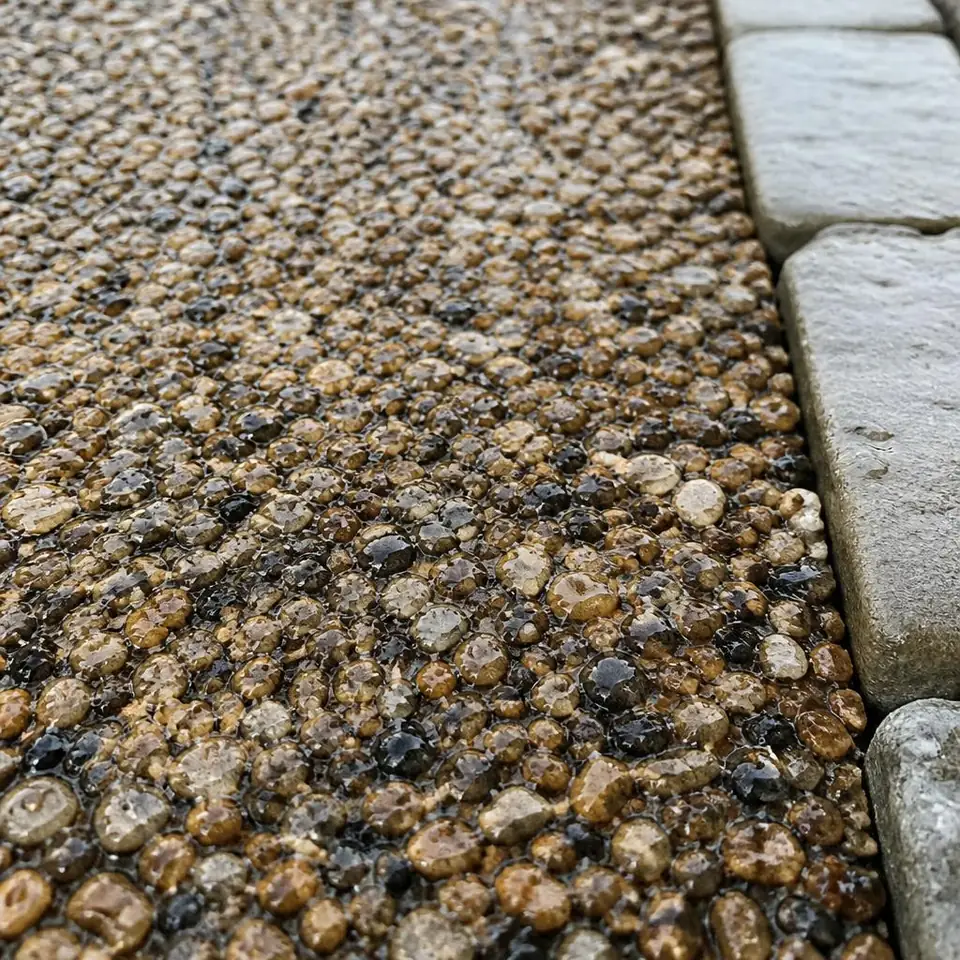
Yes, rainwater can pass through a properly installed resin-bound surface. The small spaces between the coated stones allow water to move through the top layer. But that is only the beginning of its journey: the base below and the drainage design determine where the water goes next.
If you are comparing driveway options for your Kent home, it also helps to know that resin-bound and resin-bonded are two different systems. They do not deal with rain in the same way.
Resin-bound and resin-bonded: what is the difference?
For a resin-bound surface, the aggregate is mixed with resin before it is laid. Once cured, connected spaces remain between the stones, so water can pass through the surface. The finished layer has an even, textured appearance.
With a resin-bonded finish, resin is applied to the base and aggregate is scattered over it. The resin layer forms a generally impermeable surface, so rainwater needs to be managed as runoff rather than relying on water passing through it.
At DPK, our driveway service focuses on resin-bound surfacing. When asking for a quote elsewhere, check which system is being proposed: the names are easy to confuse.
What happens after water passes through resin-bound surfacing?
A permeable surface needs a suitable route for water beneath it. On a purpose-designed permeable construction, water may pass through a suitable porous base and be stored or move onwards as the drainage design allows. Ground conditions and the capacity of the layers beneath the surface need to be considered.
An existing solid concrete or dense tarmac base behaves differently. Resin-bound material laid over it does not make that base permeable. Water can reach the impermeable layer and will need a suitable route away, which may involve falls and drainage details designed for the property. An overlay may be possible on a suitable, stable existing base, but the base and drainage should be assessed before work begins.
A driveway should not be described as automatically SuDS-compliant just because its top layer is permeable. The complete design, where the water goes, and the site conditions all matter. SuDS means sustainable drainage systems: approaches intended to manage surface water more effectively.
Does a resin-bound driveway need planning permission?
For domestic front gardens in England, government guidance explains that planning permission is generally required when more than 5m² is covered with an impermeable surface and rainwater is not directed to a permeable area. Permeable construction or suitable provision for runoff may avoid the need for permission under those rules.
That is not a blanket approval for every driveway. Other restrictions or requirements can apply, so check the proposed work and drainage with your local planning authority before proceeding. You can read the government guidance on permeable surfacing of front gardens.
Can dirt stop water draining?
Leaves, soil and organic debris can build up on a driveway and interfere with drainage through the surface over time. Sweep away loose material regularly, especially around shaded areas and edges, and keep any channels or outlets clear.
For deeper cleaning, follow the surface manufacturer's or installer's instructions. If a pressure washer is permitted, use it only within their guidance on pressure, distance and technique. Avoid experimenting with aggressive chemicals or abrasive tools. Our resin driveway maintenance guide explains what to look for.
What if water stays on the driveway?
Brief surface water after heavy rain does not, by itself, tell you what is wrong. If water regularly remains in the same place or drainage seems to have changed, note where it collects and how long it stays. Photographs taken safely after rain can help describe the issue.
Possible causes include a build-up on the surface, the condition of the layers beneath it, blocked outlets or the way the driveway was designed. A professional assessment is needed to identify the cause before choosing a repair. Do not assume that a permeable top layer guarantees a puddle-free driveway in every situation.
Questions to ask before installation
A clear quote should help you understand how the driveway will be built and how water is expected to leave it. Ask your installer:
- Is the proposed surface resin-bound or resin-bonded?
- Is the existing base suitable, or does it need repair or replacement?
- Where will rainwater go after it reaches the base?
- Are drainage channels or other work included in the written quote?
- Are there any local planning or drainage requirements to check?
- What cleaning and aftercare does the chosen product need?
For help recording how rain behaves at your property before a visit, see our resin and drainage questions guide.
Frequently asked questions
Is every resin driveway permeable?
No. Resin-bound systems are designed with spaces that allow water through the surface. Resin-bonded finishes generally form an impermeable layer, so they need a suitable way to manage surface runoff.
Can water drain through resin laid on concrete?
Water may pass through the resin-bound layer, but an impermeable concrete base will prevent it soaking straight down through that base. The installation needs a suitable drainage route designed for the property.
Can a resin driveway still have puddles?
Yes. Surface condition, rainfall intensity, low points, the base and drainage arrangements can all affect how quickly water disperses. Persistent pooling should be assessed rather than diagnosed from the surface alone.
Discuss your resin driveway in Kent
If you are considering a resin-bound driveway, we can discuss the existing surface, your plans and the drainage questions relevant to your property. Call Driveway and Patio Kent on 07538 912 391 or request a free written quote. You can also read about our resin-bound driveway service.