Sandstone
Often selected for varied warm tones and visible texture. Colour, markings and surface character can differ between individual slabs and batches.
Driveway and Patio Kent
Loading driveway and patio information…
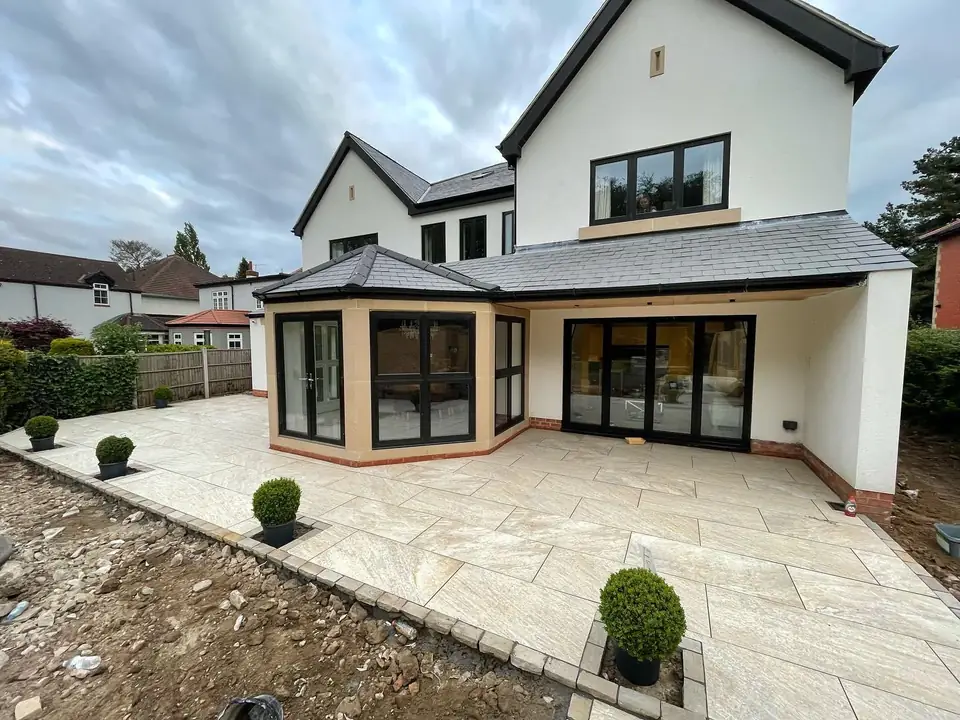
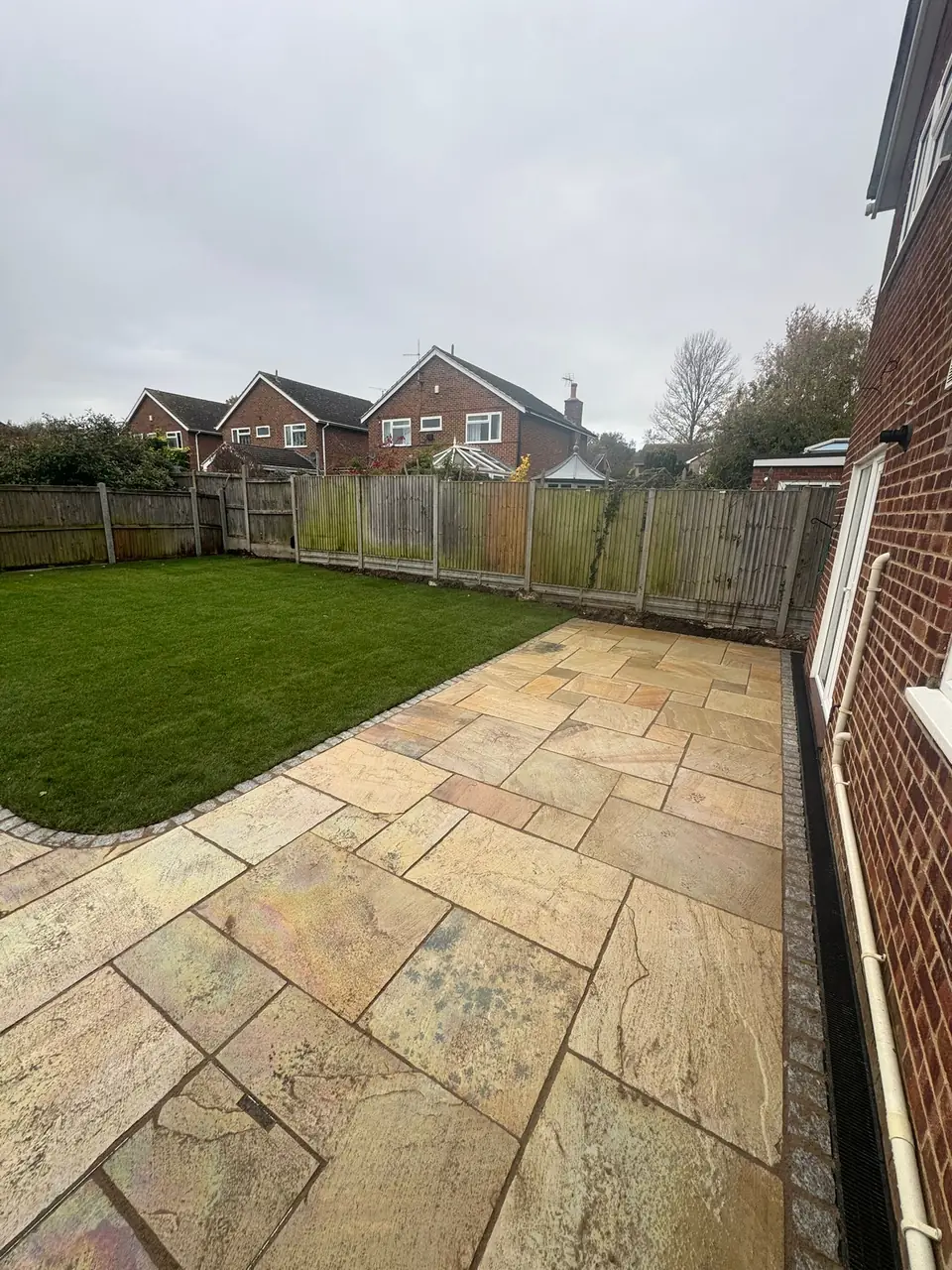
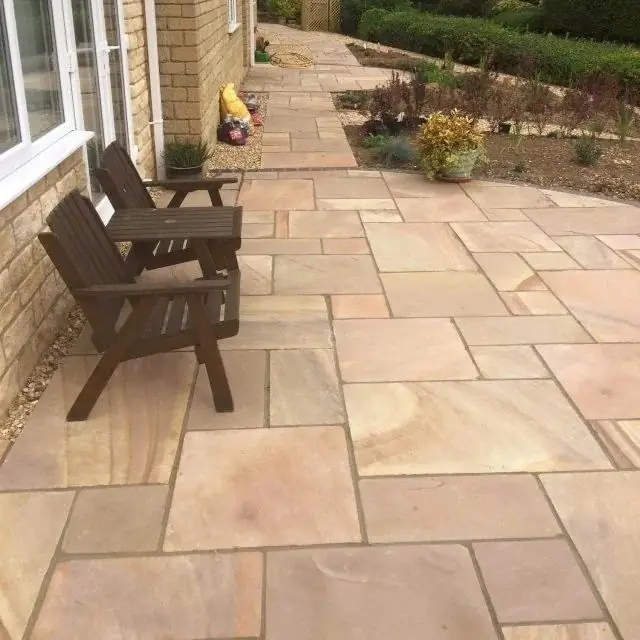
Natural stone brings variation in colour, texture, markings and surface character to patios, paths and garden areas. The stone type is an important starting point, but the delivered batch, calibration, layout, ground, access, levels and intended use all influence the finished result.
We are fully insured and provide free written quotes. A written scope can explain the proposed stone, preparation, bedding, jointing, edges, steps and transitions while allowing for the natural variation that makes each product different.
Natural stone can suit a patio, path or garden area where variation, texture and a less uniform surface are part of the brief. Sandstone, limestone, slate and granite each bring different colour ranges, formats, textures and product considerations.
Suitability depends on the selected product and the location rather than the material name alone. Consider the intended use, weather exposure, surrounding planting, access, available levels and the supplier’s current guidance before fixing the layout.
Sandstone is often chosen for warm or mixed tones and a textured character. Limestone can have a more restrained colour range, slate is commonly selected for layered texture and darker tones, and granite is a dense option used for some paving or detailing applications.
These descriptions are broad starting points, not a promise about every product. Natural stone varies between slabs, packs and batches. Samples help compare the direction of a design, but the installed surface will retain the character of the selected stone.
Often selected for varied warm tones and visible texture. Colour, markings and surface character can differ between individual slabs and batches.
A natural stone option with its own colour and texture range. Check the particular product’s external suitability and care information.
Slate can bring layered texture and darker colour; granite is used for some paving and details. The selected product determines the format and finish.
Natural stone needs a construction build-up suited to the ground, the paving product and the intended use. Excavation or removal may be needed to establish levels, followed by consideration of the ground, sub-base, compaction, bedding, joints and finished thresholds.
Calibrated stone is processed to a more consistent thickness than uncalibrated stone, but the actual product thickness and tolerance still matter. There is no universal excavation depth or sub-base detail: access, ground conditions, levels, drainage and the selected stone all affect the proposed preparation.
Check stability, movement, levels and drainage before retaining an existing surface. A surface that looks sound is not automatically suitable to build over.
Thickness affects handling and laying detail, but the supplier’s product information remains the reference for the particular stone.
Natural variation is easier to work with when packs, access, storage and the intended layout are considered before laying starts.
Natural stone can be sorted during setting out to balance the available colours, markings and sizes, but sorting does not make a batch uniform. The proposed bedding, joint width, jointing product, cuts, edge restraints and movement between surfaces should suit the stone and the site.
Laying guidance should remain careful and product-aware. Calibrated and uncalibrated products can have different handling and preparation considerations, so the written scope should identify the intended arrangement and refer to the current supplier guidance rather than prescribe one method for every stone.
Set out the stone in relation to the house threshold, paths, lawn, planting, walls, covers and retained paving. Falls should be considered with the existing ground, downpipes, gullies, boundaries and the intended route for water.
Natural stone does not automatically determine drainage performance or planning compliance. If the hard surface is altered or combined with retaining work or another structure, check current requirements for the particular property with the relevant local authority.
Borders, edge restraints and transitions should be agreed before the stone is ordered. Edge details affect cuts, levels, movement and the way natural variation is seen around the perimeter.
Natural stone can connect a patio to a path, step or threshold where the selected product and construction details suit the location. Slab thickness, edge character, level changes and the available handling route all matter more when the garden is narrow or steep.
A quote should show the patio footprint, any step or riser, landing areas, door openings and adjoining surfaces. It should also note whether the natural stone is being used for the path or steps as well as the main patio.
Natural stone projects need a clear scope because material selection, sorting, cuts and transitions can matter as much as the total area. A small courtyard may need detailed perimeter work; a larger garden may need separate zones, packs, paths, steps and drainage items.
Natural variation is a material characteristic, not a defect to be eliminated. Colour, texture, veining, surface markings and tone can change between slabs and batches. A sample cannot guarantee an identical finished colour across a whole patio.
Slip information and care depend on the specific stone, finish, weather, shading, joints and surrounding garden. Regular sweeping and suitable cleaning may be sensible, but cleaning products should be appropriate for the stone. Sealing is optional and product-dependent rather than a universal requirement.
Review the stone’s external suitability, thickness, finish, slip information, cleaning notes and any sealing guidance from the supplier.
Use samples to compare direction and tone while allowing for the natural variation that will remain between delivered slabs.
Sweep, clean and look after joints using methods suitable for the selected stone and any sealer; avoid generic harsh or acidic treatments.
A useful enquiry gives enough context to discuss stone type and construction without treating photographs as a survey. Include the location, approximate dimensions, intended use, stone direction and any access, level or drainage constraints.
Request a free written quote · See the illustrative paving gallery · View all driveway and patio services
Use the patios landing page to compare the wider project questions, then review porcelain and block paving where a more consistent finish, pattern or repair approach is part of the brief. The area pages add planning context for Canterbury, Ashford and Maidstone.
Plan the wider patio project · Read the outdoor porcelain guide · Compare block paving · Natural stone paving in Canterbury · Natural stone paving in Ashford · Natural stone paving in Maidstone · Patio installation guide · Best patio materials in the UK
Natural stone is formed material, so colour, veining, texture, surface markings and tone can vary between individual slabs, packs and batches. Samples guide a choice but do not guarantee an identical finished colour.
There is no universal best stone. Sandstone, limestone, slate and granite differ in appearance, thickness, texture, product information, care and available formats. Compare the specific product with the garden and intended use.
Calibrated stone is processed to a more consistent thickness than uncalibrated stone. The actual thickness, tolerance and laying guidance remain specific to the selected product.
Preparation can include excavation or removal, consideration of the ground, a suitable sub-base, compaction, bedding, jointing, edges and finished levels. The correct build-up depends on the stone, ground, access, intended use and drainage.
An existing surface should be checked for stability, movement, levels, drainage and compatibility with the selected stone and laying detail. It may need preparation or removal rather than being assumed suitable.
Sealing is optional and depends on the stone, finish, location and product guidance. If a sealer is considered, it should be suitable for the particular stone and used according to the supplier’s instructions.
Regular sweeping, suitable cleaning and attention to joints are sensible. Cleaning products and any sealer should be appropriate for the specific stone; avoid assuming that one treatment suits every natural stone surface.
Share the location, approximate size, intended use, photographs, preferred stone direction, access route, existing surface, level changes, drainage features and whether paths, steps, edges or other garden work are included.
Request a free written natural stone quote or call 07538 912 391.